Ashanti Gold and Kente Clothe – Kumasi
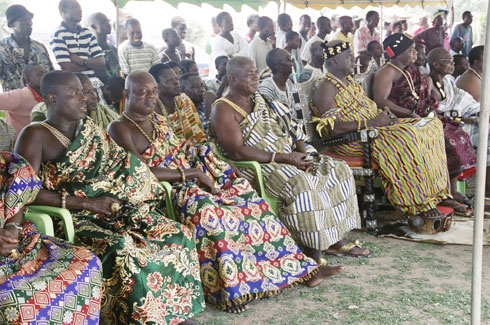
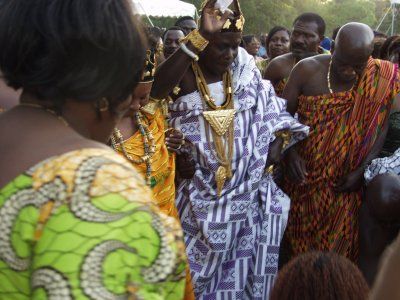
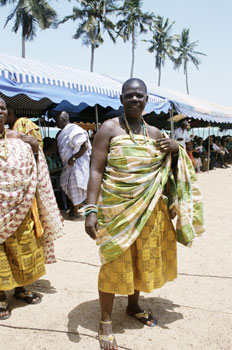
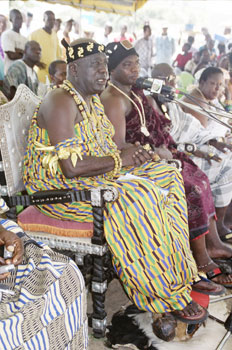
From all directions they come to pay homage to the Ashanti King, Otumfuo Osei Tutu II.
 |  |
 |  |
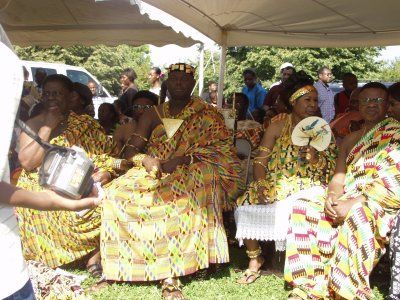 | 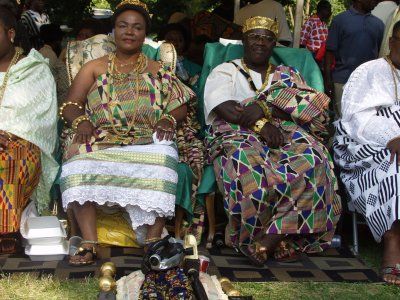 |
This is Kumasi, 17th century capital of the Ashanti Kingdom, home of gold and the culture heartbeat of the 21stntury Ghana.
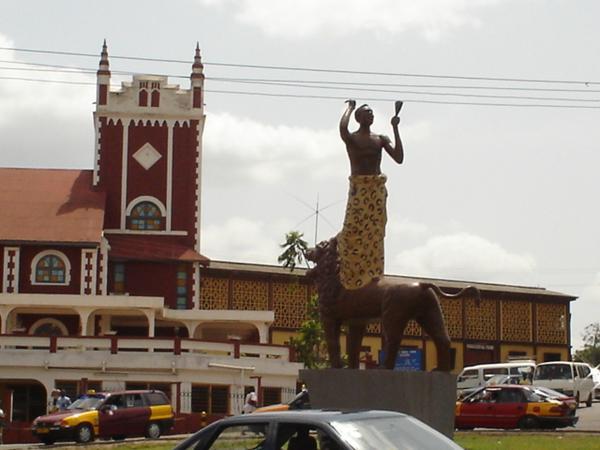
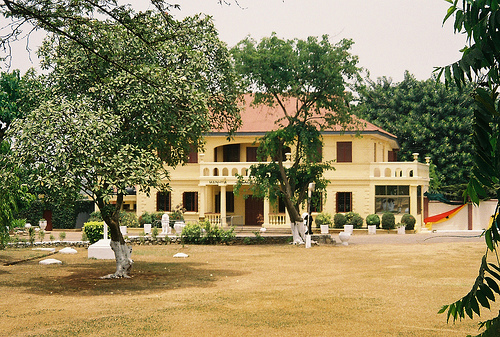
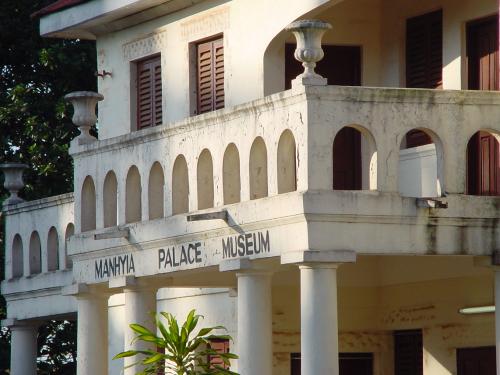
Standert – (baers) and parols, it could’ve been medieval Europe, but that is the Manhiya Palace, centre of the country’s centruies old historical tradion.
 |  |
The ‘unmovable’ Sword of the Komfo Anokye remains in the grounds of the Okomfo Anokye Teaching Hospital, where he pushed it. It is believed the Komfo pronounced that no one would be able to remove the sword, and so it has remained in spite of many attempts. | 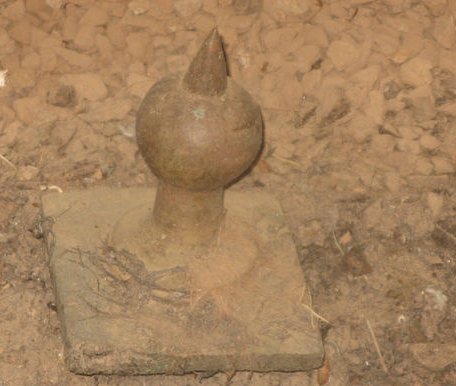 |
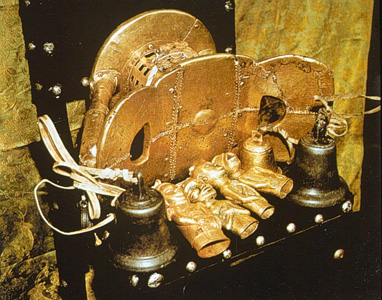
According to legend, Okomfo Anokye ( High Priest and one the two chief founders of the Asante confederacy) caused the famous Asante royal throne known as the Golden Stool ( Asante: Sika "dwa) to descend from the heavens and land on the lap of the first Asante king, Osei Tutu. Such seats were traditionally symbolic of a chieftain`s leadership, but the Golden Stool is believed to house the spirit of the Asante nation-living, dead and yet to be born.
|  |
A fifteen – minute drive from the city will bring you to the villages of Bonwire and Adanwomase are home to Ghana’s – possibly Africa’s – most famous cloth.
An icon of Ghanaian culture, the beauty of the Kente cloth is in the wearing, design and the weaving.
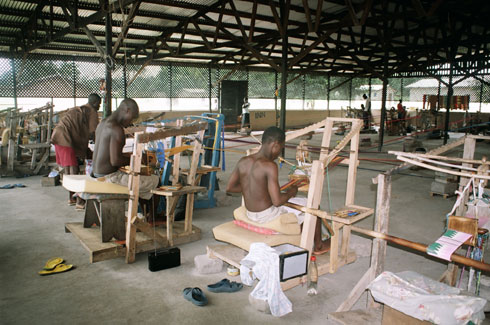 | 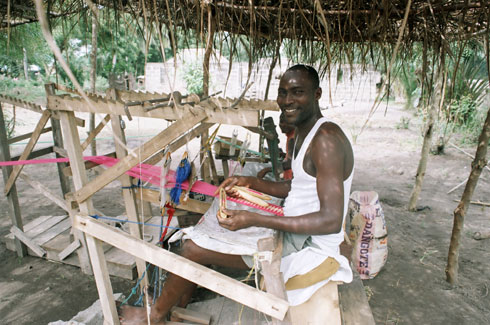 |
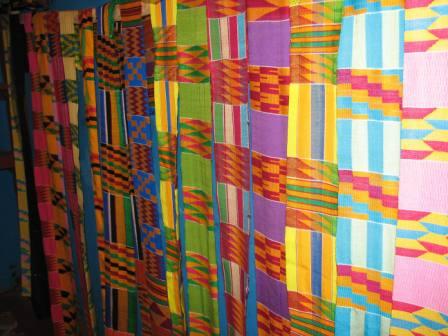
From what you will see, this ancient art of threading silk using a loom is still practiced at the side of the road.
